
T. Rowe Price



NEW

The Greatest Fixed Income Investment Opportunity in Decades?
Are you ready for a world where the 10-year U.S. Treasury yield goes to 6%? Explore why such a shift may occur, what the asset allocation implications are, and what strategies can help to effectively navigate this landscape.
Read More


Does the “One Big Beautiful Bill” = big beautiful profits?
The One Big Beautiful Bill Act marks a shift in fiscal policy, with the potential for a boost in corporate profits through investment-oriented provisions. Explore how this could impact different sectors and be supportive for credit markets.
Read More


Inflation’s Underappreciated Comeback
We Believe the Market is Underestimating Inflation and Longer-Term Interest Rates
Read More
Ahead of the Curve: Should We Be More Worried About U.S. Growth or Inflation? Or Neither?
Arif Husain, head of Global Fixed Income and CIO, sees U.S. growth remaining uncertain, but inflation risks are rising with tariffs and fiscal policy. The Fed is in a difficult spot as it monitors incoming economic data.
Read More

Bonds With Credit Risk May Outperform Government Debt
A combination of tariffs and German fiscal reform have led to a weaker outlook for sovereign debt and a stronger one for credit and some emerging markets.
Read More

Perspectives on Securitized Credit - Q1 2025
Securitized credit markets posted relatively resilient performance in the first quarter of 2025, outperforming U.S. investment-grade corporates, high yield bonds, and bank loans on an excess return basis. Issuance across the four major securitized sectors moderated from late 2024’s heavy pace but remained healthy relative to historical averages.
Read More

Shifting Momentum
The "Shifting Momentum" webinar hosted by T. Rowe Price's Multi-Asset Division focused on navigating the current uncertain policy environment and tactical asset allocation positioning.
Read More
Ahead of the Curve: Tariffs add to a toxic combination for U.S. Treasuries
Tariffs and fiscal expansion could drive U.S. Treasury yields higher. Inflation risks loom, but energy prices may offer some relief. Explore strategies for inflation protection.
Read More
Three Reasons to Consider T. Rowe Price Diversified Income Bond Strategy
Our Diversified Income Bond Strategy is an actively managed flexible “go‑anywhere” core bond strategy. We believe it offers three key benefits of attractive income potential, a truly global portfolio, and a controlled risk profile.
Read More
In The Loop: Tariffs Create Uneven Outcomes, But They Can Also Present Opportunities
Tariffs create uneven outcomes. Economically, more U.S. consumers and corporations are likely to be negatively impacted compared with the beneficiaries. However, policy changes present opportunities for active managers. In fixed income markets, we see advantages in a globally diversified approach.
Read More







SS&C's Day of Thought Leadership: Trends and Challenges in Reinsurance Investment - Insurer Insights for 2025
InsuranceAUM.com recently joined the Day of Thought Leadership event focusing on reinsurance investment trends and challenges.
Read More






Ahead of the Curve: How U.S. immigration changes could impact inflation and the Fed
U.S. immigration policy changes could meaningfully reduce the labor force. This could have impactful economic consequences, such as renewed upward pressure on wages, which could push inflation higher. Resurgent inflation would, in turn, influence Federal Reserve decisions on interest rates.
Read More
Trump’s tariffs are a wild card for the global economy
The new U.S. administration’s planned tariffs will damage global trade, negatively impacting both the U.S. and its trading partners. A stronger dollar will likely create a demand shock, triggering a wave of central bank rate cuts and weakening equity markets. The countries most at risk include the manufacturing hubs of Asia and Eastern Europe and the U.S.’s close trading partners Canada and Mexico.
Read More
Looking for income in 2025? These bond solutions could help
In today’s uncertain markets, we believe that fixed income is attractive, as there’s an opportunity to generate potential income alongside other specific objectives. In this piece, we are delving into the characteristics of four different bond solutions and how they align to distinct investment goals.
Read More



Q3 Perspectives on Securitized Credit
Although valuations for securitized credit sectors aren’t screaming cheap following solid year-to-date performance, fundamentals remain benign, and our research platform continues to see pockets of value. Yields also remain attractive for investors seeking income and diversification.
Read More
From The Field: Could a 5% 10-year Treasury yield be around the corner?
The 10-year U.S. Treasury yield could reach 5% due to fiscal stimulus in an election year, supply/demand dynamics from Fed quantitative tightening, and higher term premiums driven by inflation expectations.
Read More
From the Field: Cutting cycles and learning to love bonds again
With the Fed widely expected to cut rates in September, we looked at how different asset classes performed during past cutting cycles. Bonds consistently outperformed cash and stocks often outperformed bonds, but the evidence is less clear for small-cap versus large-cap and other trade-offs.
Read More


From the Field: Ahead of the Curve The San Andreas fault of finance shakes the markets
Bank of Japan tightening and its impact on the flow of global capital is far from simple, and it will have a large influence over the next few years. However, in the context of other mega-trends such as unsustainable fiscal expansion in some developed countries, volatility shouldn’t be a shock.
Read More

Why passive flows and inelastic markets don’t mix
Investors should be wary of the heightened volatility and extreme price swings in bond markets due to the growing inelasticity of passive fixed income investing
Read More
Ahead of the Curve | "Shadow banking system" creates a trickier path for the Fed
The rapid increase in U.S. nonbank lending has caused banks to shift their risk exposure toward liquidity risk and away from credit risk. The effects of this shift could interact with the Federal Reserve’s quantitative tightening (QT) program, potentially forcing the central bank to end QT.
Read More


Active investing is suited to the uncertain markets ahead
Financial regulators would likely be more proactive and involved under a Democratic president than in a Republican administration.
Read More




What factors are driving U.S. exceptionalism, and will they last?
U.S. economic growth has outperformed other developed markets, leading to divergent monetary policy expectations. A slowdown in U.S. GDP and employment growth could lead to narrowing outperformance and congruent monetary policy paths. However, other factors support longer-term divergence.
Read More
Opportunities in fixed income for investors moving out of cash
With the path of cash rates uncertain, we think it is time for investors to consider redeploying into the market. But where? With bond yields near historic highs, we believe that fixed income is an attractive asset class to put cash to work—especially for investors seeking to lock in income.
Read More
Let’s get real (about interest rates)
“The New Normal was abnormal.” The near-zero interest rates of the last decade heavily favored growth stocks, but gravity has returned to financial markets. A tactical tilt to value stocks might be warranted over the longer term.
Read More
Perspectives on securitized credit - Q1 2024
The rally in securitized credit market that began in late 2023 accelerated in early 2024 even as the Federal Reserve pushed back on the market’s high expectations for rate cuts. Amid less enticing valuations, we still see pockets of value, supportive technical conditions, and decent fundamentals.
Read More
Blue bonds: The key to unlocking the blue economy’s potential
An increasingly prominent environmental issue is the declining health of the world’s oceans. Blue bonds have emerged as a critical tool in potentially attracting investment into the blue economy and play a part in providing finance to help address the pressing issue of ocean health.
Read More
WHY IS IT IMPORTANT TO MEASURE THE IMPACT OF A BLUE BOND?
Like other sustainable debt, blue bonds need to be evaluated differently to mitigate against bluewashing risks. There are four areas that are critical to analyze, including the issuer’s sustainable Investing profile, alignment with industry standards, bond creditability, and post-issuance reporting.
Read More

A decade-long adventure navigating treacherous markets successfully
As the Dynamic Global Bond Strategy celebrated its 10-year anniversary since launch in February, we analyze the key drivers for performance, whether the strategy has kept up with the changing times, and if it is still relevant in a market environment that is a mirror image of the time when it was launched.
Read More
With rising headwinds, uncover the power of quality credit research
For insurance companies, corporate bonds offer attractive income, but security selection is imperative as rising headwinds could lead to defaults picking up.
Read More
Dynamic credit investing: A Q&A with Saurabh Sud
Saurabh Sud passed his five-year anniversary as portfolio manager of the Dynamic Credit Strategy!
Read More
Corporate bonds— A compelling long‑term income profile
Credit markets remain a compelling income-generating opportunity. But with headwinds rising, some investors may be feeling apprehensive. In this piece, we’re delving into the dynamics and how an approach that prioritizes research can help to instill confidence about credit investing in 2024.
Read More
Perspectives on Securitized Credit - Q4 2023
Securitized credit markets joined in the year-end cross-asset rally, fueled by a discernable shift in the Federal Reserve’s tone, leading to broad gains in 2023 and strong tailwinds entering 2024. With credit-risk premiums much lower, we analyze the opportunities seen in the new year.
Read More
Central bank rate-cut pricing is eye-catching but deceiving
The aggressive monetary easing priced in to markets is simply an average of expectations priced in across a range of potential outcomes, so it can be deceiving.
Read More
Will new long-term debt holders effectively discipline banks?
New U.S. regional bank debt can lower the odds of a default and help reduce the cost of a failed bank, but this requires holders to discipline riskier banks.
Read More
How could energy productivity cycles lead to credit opportunities
Portfolio Manager Steve Boothe highlights factors that could cause energy productivity to wane and usher in a bull market for oil and gas. These changes in productivity could create opportunities for energy credits.
Read More

The Active Advantage in High Yield
Active management of high yield bonds offers several advantages over a passive approach, in our view.
Read More
Government Bond Issuance Boom to Pressure Yields Higher
A flood of new global sovereign debt will affect market dynamics.
Read More
High Yield Bond Market Changes Provide Support
Transformations have bolstered high yield for a modest downturn.
Read More
Perspectives on Securitized Credit
Securitized credit markets produced mixed results in the third quarter. Despite a steep rise in U.S. Treasury yields, credit investors appeared more confident that the Federal Reserve could engineer a soft economic landing. Securitized credit was generally resilient, aided by light supply, which helped to offset gradually deteriorating fundamentals.
Read More
The Case for High Yield
The credit quality of the high yield market has drastically improved since the global financial crisis (GFC). Meanwhile, unprecedented quantitative tightening and related recession fears have led to rate and credit spread volatility since the first quarter of 2022, resulting in attractive yields and dollar discounts not seen since the GFC.
Read More
Emerging Markets—Dancing to Their Own Beat
After a solid first-half performance, what does the remainder of 2023 look like for emerging markets (EM)? It could be more of the same, but it will be important to keep an eye on China and whether the slowdown there drags down the rest of EM and weighs on sentiment. For now, we are seeing resiliency on the growth side, while inflation has come down quickly. On the monetary policy front, several countries are positioned to embark on an interest rate-cutting cycle soon—striking out ahead of their developed market peers—which is an encouraging sign that EM is maturing as an asset class.
Read More
Perspectives on Securitized Credit
Since early April, securitized credit markets maintained the positive momentum that transpired following March’s banking system distress. Improved investor sentiment supported demand for risk assets broadly, benefiting securitized assets. A moderation in high interest rate volatility and signs that the Federal Reserve was near the end of its tightening cycle were positive factors for more interest rate-sensitive areas such as residential mortgage-backed securities, which enjoyed a strong quarter. Supply technicals remained highly supportive, but fundamentals are gradually worsening, and valuations have become more fair than cheap, resulting in a relatively neutral outlook for the asset class. However, yields are broadly attractive for long-term-oriented investors. We saw the best opportunities in high-quality asset-backed securities and collateralized loan obligations, had a balanced opinion of non-agency residential mortgage credit, and remained cautious on commercial mortgage-backed securities.
Read More
Buy and Align—The Next-Generation of Buy and Maintain Portfolios
Introducing the Net Zero Transition Product Framework, which seeks to deliver financial returns and manage risk while promoting energy transition. Category: ESG
Read More
Central Banks Step Into Potential Policy Error Territory
Recent hawkish stances taken by some major developed market central banks raise the question of whether we are entering the zone of a global monetary policy mistake. There is now a meaningful risk that these central banks could overtighten in their quest to quell inflation and help push the global economy into recession.
Read More
U.S. Debt Deal Does More Than Avoid Default
The deal to suspend the limit on the U.S. government’s borrowing averted a default but also appears to mark a new era in fiscal policy, with growth in federal spending moderating for at least the next two years and perhaps longer.
Read More
ESG Integral to Emerging Markets Corporate Bond Investing
In this Q&A, we sit down with Siby Thomas, co-portfolio manager for the Emerging Markets Corporate Bond Strategy, to discuss the importance of environmental, social, and governance (ESG); his approach; and the key trends to watch out for in this space in the future.
Read More
Strategy Focus on Global Impact Credit
Matt Lawton gives an overview of the characteristics and attributes of the Global Impact Credit strategy.
Read More
The Art of Actively Managing Interest Rate Risk
When managing interest rate risk, it’s important to go beyond duration as risk and alpha opportunities can also be found in country selection, convexity, curve positioning, and security selection.
Read More
Perspectives on Securitized Credit
Securitized credit markets experienced a choppy rebound to start 2023. We discuss the driving factors and what’s next.
Read More
Smoothing the Ride for Credit Allocations
The Dynamic Credit Strategy seeks to offer investors a “smoother ride” in credit investing by finding diverse alpha sources in a variety of market environments. The strategy focuses on credit selection and sector rotation across the credit spectrum by harnessing expertise across T. Rowe Price’s global multi-sector research platform.
Read More
Fostering Change With Impact Investing
Impact investing has gained traction in recent years to address the needs of investors seeking a more values-based investment approach. We brought together our three impact portfolio managers to discuss the rise of impact investing and how they see the sector evolving.
Read More
When Markets Twist and Turn, Flex Your Fixed Income
After a challenging period, bond markets are better priced for the new realities of high inflation and tighter monetary policy. Therefore, we have identified five flexible bond opportunities to help investors navigate the current market environment.
Read More
Perspectives on Securitized Credit
After a difficult year, securitized credit markets exited 2022 with positive momentum that carried over into early 2023. Valuations remain attractive relative to corporate bonds, yields are sitting well above their long-term averages, and we believe that strong bond pickers could be rewarded as fundamentals come under greater scrutiny.
Read More
Global Impact Credit—One Year On
With one year having passed since the launch of the strategy, Portfolio Manager Matt Lawton answers questions about the evolution of impact investing over the past 12 months, activity within the strategy, successes and challenges, and what he is watching in 2023.
Read More
Five Key Insights From 2022
The Fed is committed to do whatever it takes to get inflation back to healthy levels. In 2022, the rout in bonds helped to restore healthy yields but reminded investors that stocks and bonds can sometimes sell off at the same time. Meanwhile, a focus on socially oriented goals could lead to less predictable economic policy changes in China.
Read More
The Active Advantage in High Yield
There is a strong case to be made for active management in high yield bonds, in our view, with an active approach offering several advantages. Active management allows for fundamental analysis and security selection across the full high yield universe as well as the ability to nimbly reposition a portfolio to take advantage of macro trends.
Read More
Do Not Underestimate the Impact of Quantitative Tightening
Central banks appear to intend quantitative tightening (QT) measures to run largely in the background. However, our analysis suggests that QT measures may have a much bigger economic impact than expected. This may result in banks tightening more than necessary in order to bring inflation down, potentially exacerbating recessionary dynamics.
Read More
Impact Investing in Credit: Debunking Four Common Misconceptions
Companies are being measured not only by their earnings and cash flow, but according to the effect their activities have on the environment and society. As a result, credit investors no longer judge those companies solely on their risk and return characteristics, but increasingly by their external impact as well.
Read More
The Case for a Strategic Allocation to High Yield Bonds
High yield bonds, in our view, have a key role as a strategic long-term investment and a mainstay allocation in a well diversified portfolio. Historically, high yield bonds have provided equity-like returns with less volatility.
Read More
Finding Opportunities in Evolving Fixed Income Markets
Flexibility and a collaborative multi-sector approach, in our view, are essential components of fixed income portfolio management. We seek to combine well-diversified sector allocation with tactical insights to pursue consistent risk-adjusted returns across different market environments while capitalizing on bond market inefficiencies.
Read More
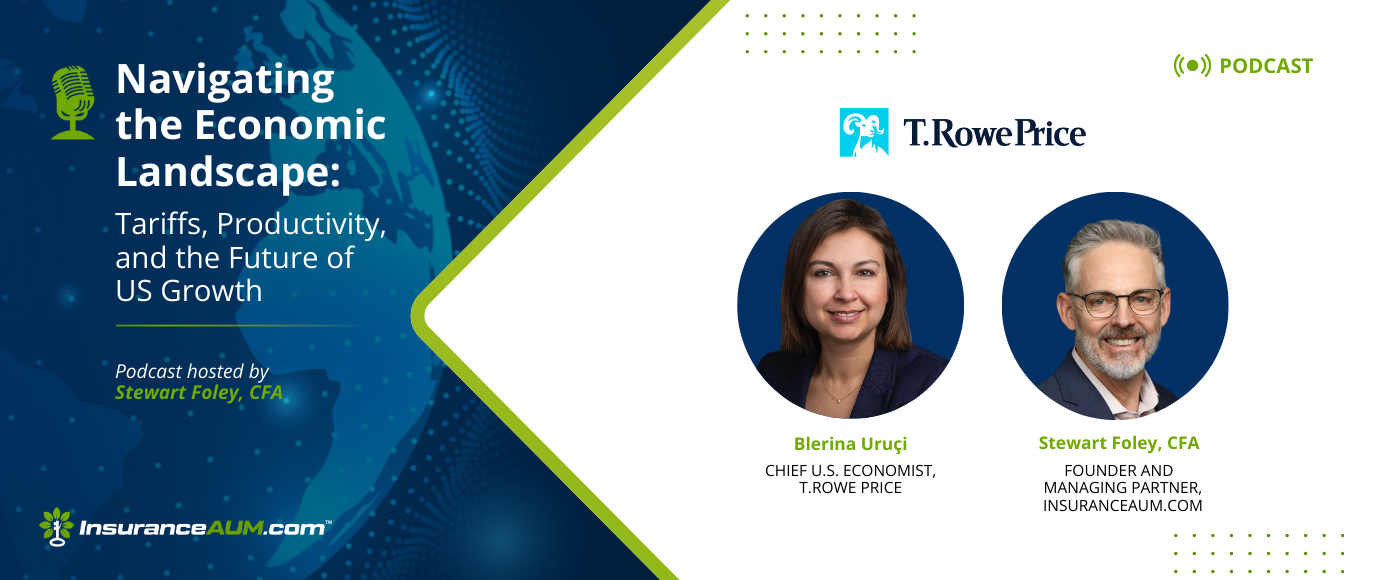
Episode 263: Navigating the Economic Landscape: Tariffs, Productivity, and the Future of US Growth
Join host Stewart Foley on the InsuranceAUM.com Podcast for expert insights into macroeconomic trends, including trade, fiscal policy, and the Fed's rate trajectory.
Read More
Episode 215: Current Perspectives on Securitized Credit
Jean-Marc Breaux is the Sector Portfolio Manager, Fixed Income Division at T. Rowe Price.
Read More
Episode 168: Quality High Yield Offers Performance Resilience and Diversification
Paul Massaro is the Head of Global High Yield Franchise and a member of the Senior Management Asset Allocation Committee at T. Rowe Price.
Read More
Episode 165: Passive Investing Doesn’t Exist in Fixed Income
Steve Boothe is the Head of Global Investment Grade at T. Rowe Price.
Read More
Episode 139: Global Fixed Income and More with Arif Husain, Fixed Income CIO of T. Rowe Price
Arif Husain is the Head of International Fixed Income and CIO at T. Rowe Price.
Read More
Episode 115: The Private Credit Landscape with Bill Bohnsack, President of Oak Hill Advisors
Bill Bohnsack is the President of Oak Hill Advisors.
Read More
Episode 96: Why Impact Investing Goes Beyond Green Bonds
Join host Stewart Foley on the InsuranceAUM.com Podcast as we discuss impact investing, green bonds, and public fixed income strategies tailored for insurance investors.
Read More
Episode 88: A Bank Loan Approach to Insurance Mandates
Join host Stewart Foley on the InsuranceAUM.com Podcast as we explore the nuances of floating-rate bank loans, high-yield credit, and the dynamics of rising rates with insights tailored to insurance investment professionals.
Read More